

Based on peer-reviewed scientific publications and primary research.
Introduction: a billion people who don't know it
According to a global analysis led by Adam Benjafield, published in Lancet Respiratory Medicine in 2019, around 936 million adults aged 30–69 have obstructive sleep apnea - nearly one billion people. Of those, 425 million have moderate or severe disease.
And almost none of them know it. According to the American Academy of Sleep Medicine, around 80% of sleep apnea cases go undiagnosed - the condition happens during sleep, invisible to the person experiencing it.
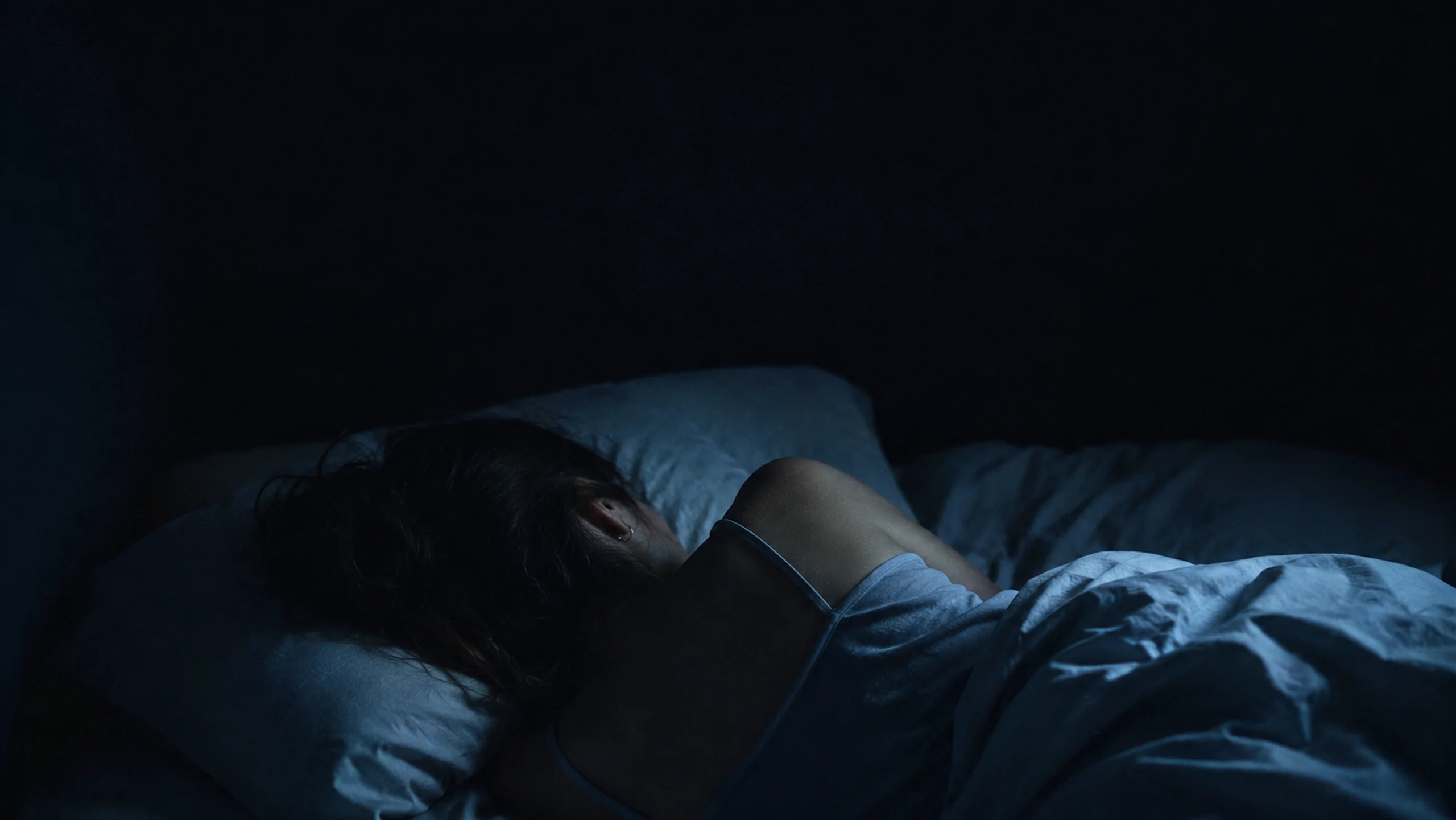
Every night, these people stop breathing dozens or even hundreds of times. The airway collapses, air stops flowing for ten seconds or longer, oxygen in the blood drops, and the brain briefly wakes to restart breathing. By morning, nothing is remembered. The person simply feels unrested - and has considered this normal for years.
Snoring is just the surface. Beneath it lies repeated nocturnal hypoxia, silently loading the heart, vessels, and brain for decades.
Part 1. What happens in the airway
The mechanics of a single episode
During sleep, the muscles that keep the upper airway open relax. In some people - due to throat anatomy, excess weight, age, or sleeping position - the passage narrows enough that air flows only partially (hypopnea) or stops completely (apnea).
The chest keeps moving, the person tries to breathe, but air doesn't come through. Blood oxygen starts to drop. After a few seconds the brain detects the threat and triggers a brief micro-arousal: muscle tone recovers, the airway opens, a sharp breath follows - often with a loud snort - and sleep continues. Then the cycle repeats.
Severity is measured by the apnea-hypopnea index (AHI) - the number of such episodes per hour of sleep:
- 5–15 - mild
- 15–30 - moderate
- above 30 - severe
In severe cases, breathing is interrupted more than thirty times per hour - at least every two minutes throughout the night.
What oxygen has to do with it
Normal blood oxygen saturation (SpO₂) during sleep sits around 95–100%. During an apnea episode it drops: sometimes by a few percent, in severe cases down to 80% or below. After each breath it recovers quickly. This repeats all night.
This pattern - recurring dips and rises in saturation - is called intermittent hypoxia. It drives most of the downstream consequences. A separate metric, the oxygen desaturation index (ODI), counts how many times per hour oxygen falls by a significant amount.
Part 2. What nighttime hypoxia does to the body
A single drop in oxygen is something the body handles easily. What's dangerous is the cycle: drop - recovery, drop - recovery, hundreds of times a night, for years.
In the landmark review «Pathophysiology of sleep apnea» (Physiological Reviews, 2010), Jerome Dempsey and colleagues describe how the hypoxia–reoxygenation cycle acts as a chronic damaging signal. Researchers converge on three main pathways.
Oxidative stress. Each oxygen recovery after a dip is accompanied by a burst of reactive oxygen species - free radicals. Their chronic excess damages the inner lining of blood vessels and leads to endothelial dysfunction, an early step toward atherosclerosis.
Sympathetic overload. Each micro-arousal triggers a brief stress hormone surge and a spike in blood pressure and heart rate. Over the course of a night there are hundreds of these spikes. Over time the nervous system stops "letting go" of elevated pressure even during the day.
Systemic inflammation. Intermittent hypoxia activates factors including HIF-1α and sustains low-grade inflammation that affects metabolism and vessel walls throughout the body.
Put this together and it becomes clear why apnea rarely stays "just a sleep problem." It's a nighttime mechanism with daytime and decade-long consequences.
Part 3. What the research shows
Blood pressure
The link between apnea and hypertension was established most convincingly by the Wisconsin Sleep Cohort. In a prospective study by Paul Peppard and Terry Young (New England Journal of Medicine, 2000), 709 people were followed for four years. Those with moderate-to-severe disordered breathing (AHI ≥ 15) had nearly three times the odds of developing hypertension compared to those with normal sleep breathing.
Heart disease and mortality
José Marín and colleagues (The Lancet, 2005) followed a large group of men for over ten years. In men with untreated severe apnea, the rate of fatal cardiovascular events was 1.06 per 100 person-years versus 0.3 in healthy controls - roughly three times higher. Notably, in patients who used CPAP regularly, event rates were close to those of healthy individuals.
Stroke and metabolism
The same Wisconsin group and several independent cohorts link sleep-disordered breathing to elevated risk of stroke, cardiac arrhythmias, and type 2 diabetes - independent of obesity and other known risk factors.
Daytime consequences
Fragmented sleep impairs attention, memory, and reaction time. Epidemiological studies link untreated apnea to a significant increase in road accidents: a person with severe apnea behind the wheel is roughly as dangerous as a fatigued or drunk driver.
Part 4. An honest caveat: what research hasn't proven yet
Observational data linking apnea to cardiovascular disease are strong and consistent. But observational data establish correlation - they leave open the question of whether treating apnea actually prevents heart attacks.
A direct test came from the large randomized SAVE trial (New England Journal of Medicine, 2016). 2,717 patients with established cardiovascular disease and moderate-to-severe apnea were randomized to CPAP plus usual care, or usual care alone. Median follow-up was 3.7 years.
CPAP did not reduce cardiovascular events: the composite endpoint occurred in 17% of the CPAP group and 15.4% in controls - no significant difference. However, CPAP notably improved daytime sleepiness, mood, and quality of life.
The honest conclusion today: apnea is robustly associated with cardiovascular risk. The ability of CPAP to prevent heart attacks and strokes has not been confirmed by the evidence base. What is firmly proven is the other benefit - how a person feels and functions during the day.
Part 5. Who should pay attention
Apnea rarely presents with one obvious symptom. More often it's a cluster of indirect signs:
- loud, habitual snoring;
- pauses in breathing or gasping during sleep - usually noticed by a bed partner, invisible to the person themselves;
- sleep that leaves no feeling of rest, and daytime sleepiness;
- morning headaches, frequent nighttime awakenings, nocturia;
- treatment-resistant hypertension and cardiac arrhythmias.
Risk factors include excess weight, male sex, older age, large neck circumference, and throat anatomy. An important caveat: apnea occurs in thin people, in young people, and in women. The stereotype of a "middle-aged overweight snoring man" obscures the majority of cases - and this is one reason the condition is so often missed.
Part 6. Wrist-based SpO₂ and its limits
Modern wearable devices measure oxygen saturation and heart rate at the wrist using reflected light (reflective photoplethysmography). Accuracy against laboratory polysomnography has been tested: in a study by Sara Browne and colleagues (Journal of Clinical Sleep Medicine, 2024), a wrist-worn oximeter produced a mean overnight saturation error of less than 3%.
A meta-analysis of wearable apnea screening showed high sensitivity (around 93%) with moderate specificity (around 63%). High sensitivity means the device rarely misses real cases. Moderate specificity means some alerts will be false positives.
A wearable sensor is a screening tool. It does not diagnose. Repeated nightly dips in saturation and a high desaturation index are reason to calmly see a doctor and get evaluated. Diagnosis is made by polysomnography or a validated home sleep test supervised by a specialist.
Apnea remains undiagnosed in 80% of people precisely because it happens in sleep, invisible from the inside. A wrist sensor turns an invisible nightly pattern into visible data - and gives a person grounds to ask their doctor the right question. The rest is the clinician's job.
Conclusion
Obstructive sleep apnea is the most common breathing disorder and one of the most invisible. Its mechanism is well understood: repeated nocturnal hypoxia, through oxidative stress and sympathetic overload, damages the vascular system. Its association with hypertension, cardiovascular disease, and mortality has been shown in large cohorts. The proven benefit of treatment today is primarily restored daytime clarity and quality of life.
If the signs are there - snoring with pauses, daytime sleepiness, stubborn hypertension, or a sensor that night after night shows oxygen dips - that's reason enough to see a doctor and get a proper sleep study. The data point the direction. The diagnosis is the specialist's to make.
Sources
- Benjafield A.V. et al. (2019) - «Estimation of the global prevalence and burden of obstructive sleep apnoea» - The Lancet Respiratory Medicine, 7(8):687–698.
- Peppard P.E., Young T. et al. (2000) - «Prospective study of the association between sleep-disordered breathing and hypertension» - New England Journal of Medicine, 342(19):1378–1384.
- Marin J.M. et al. (2005) - «Long-term cardiovascular outcomes in men with obstructive sleep apnoea-hypopnoea with or without treatment with CPAP» - The Lancet, 365(9464):1046–1053.
- Dempsey J.A. et al. (2010) - «Pathophysiology of sleep apnea» - Physiological Reviews, 90(1):47–112.
- Lévy P. et al. (2015) - «Obstructive sleep apnoea syndrome» - Nature Reviews Disease Primers, 1:15015.
- McEvoy R.D. et al.; SAVE Investigators (2016) - «CPAP for Prevention of Cardiovascular Events in Obstructive Sleep Apnea» - New England Journal of Medicine, 375(10):919–931.
- Browne S.H. et al. (2024) - «Performance of a commercial smart watch compared to polysomnography reference for overnight continuous oximetry measurement» - Journal of Clinical Sleep Medicine, 20(9):1479–1488.
- American Academy of Sleep Medicine (2023) - National report on the burden and underdiagnosis of obstructive sleep apnea.