


VO2 max is not a vanity metric for athletes. It is an integrated marker of the heart, lungs, blood, and muscles working together, and large studies consistently link it with survival.
The Cleveland Clinic study
In 2018, researchers at Cleveland Clinic published findings from a 23-year observation of 122,000 patients. They compared dozens of clinical variables: cholesterol levels, blood pressure, smoking history, diabetes, and cardiovascular disease. VO2 max predicted survival better than any of them.

What VO2 max is
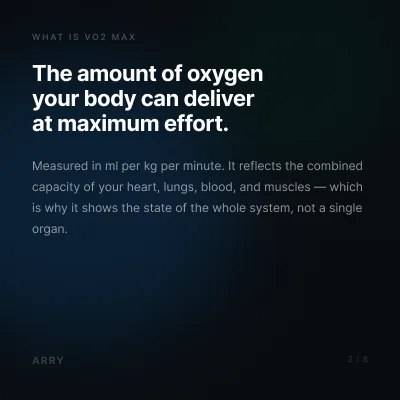
VO2 max is the amount of oxygen your body can deliver and use at maximum effort, measured in millilitres per kilogram of body weight per minute. Behind that number lies the combined performance of the heart, lungs, blood, and muscle tissue, which is why it reflects the state of the system as a whole, not any single organ.
Why it is linked to mortality risk
Peter Attia, physician and longevity researcher who has analysed data from over 750,000 people, puts it directly: patients in the bottom quartile for VO2 max face four times the all-cause mortality risk compared to the top quartile. The gap between the first and second quartile alone is larger than the gap between smokers and non-smokers.
What happens after 35
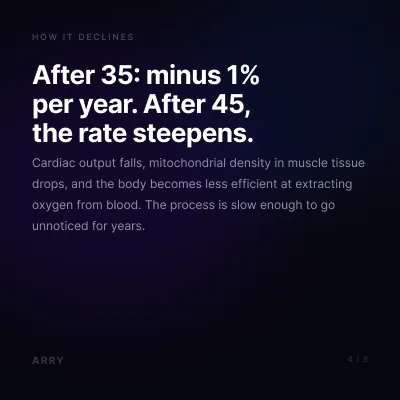
After 35, VO2 max declines at roughly 1% per year without intervention. After 45, the rate accelerates. The mechanism is well understood: maximum cardiac output falls, mitochondrial density in muscle tissue drops, and cells become less efficient at extracting oxygen from blood. Each of these processes responds to training, and that is the critical point.
How to improve VO2 max
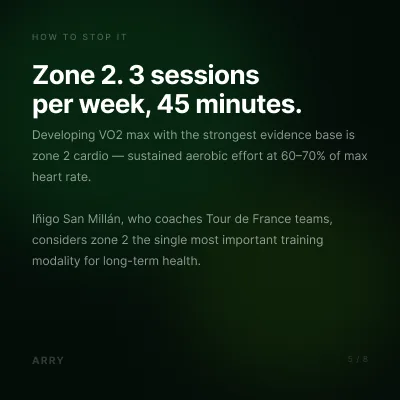
Developing VO2 max with the strongest evidence base includes zone 2 cardio: sustained aerobic effort at 60–70% of maximum heart rate. At this intensity, the body preferentially builds mitochondrial density and fat oxidation capacity. Iñigo San Millán, physiologist and coach to Tour de France teams, considers zone 2 one of the key training modalities for long-term health. Three sessions per week, 45 minutes each, produce a measurable improvement in VO2 max within eight weeks, at any age.
How Apple Watch estimates VO2 max
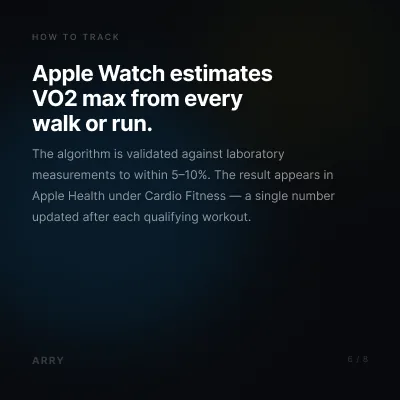
Apple Watch estimates VO2 max from heart rate and movement data during outdoor walks, outdoor runs, and hiking workouts. Apple describes this metric as Cardio Fitness and displays it in Apple Health under Cardio Fitness: a single number updated after qualifying workouts.
Why the trend matters
A single measurement has no predictive value on its own. What research tracks is trajectory: whether the number holds, rises, or falls over months and years. Eight weeks of consistent zone 2 training produces a measurable improvement at any age. What matters is tracking the VO2 max trend.

Arry tracks your Cardio Fitness trend alongside HRV, sleep, and recovery, so you can see if what you're doing is actually working. Open Arry

Sources
- Mandsager K. et al. (2018) - Association of Cardiorespiratory Fitness With Long-term Mortality Among Adults Undergoing Exercise Treadmill Testing, JAMA Network Open.
- Apple Support - Track your cardio fitness levels.
- Apple - Using Apple Watch to Estimate Cardio Fitness with VO2 max.