

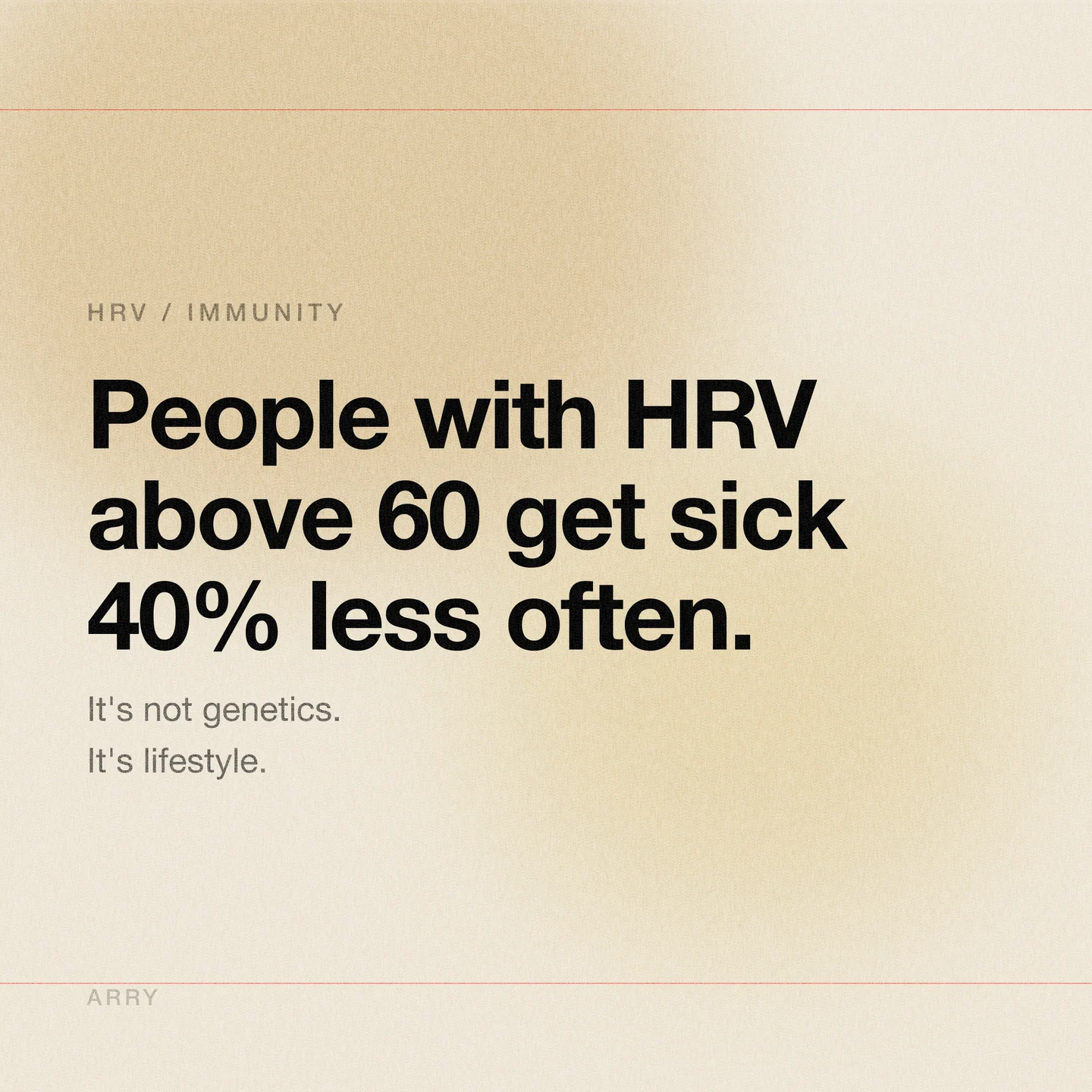
During sleep, Apple Watch can measure HRV - heart rate variability. It is one of the signals that reflects autonomic nervous system balance and recovery. In wearable-device research, changes in HRV, heart rate, and respiration often appeared 1–2 days before early signs of illness.
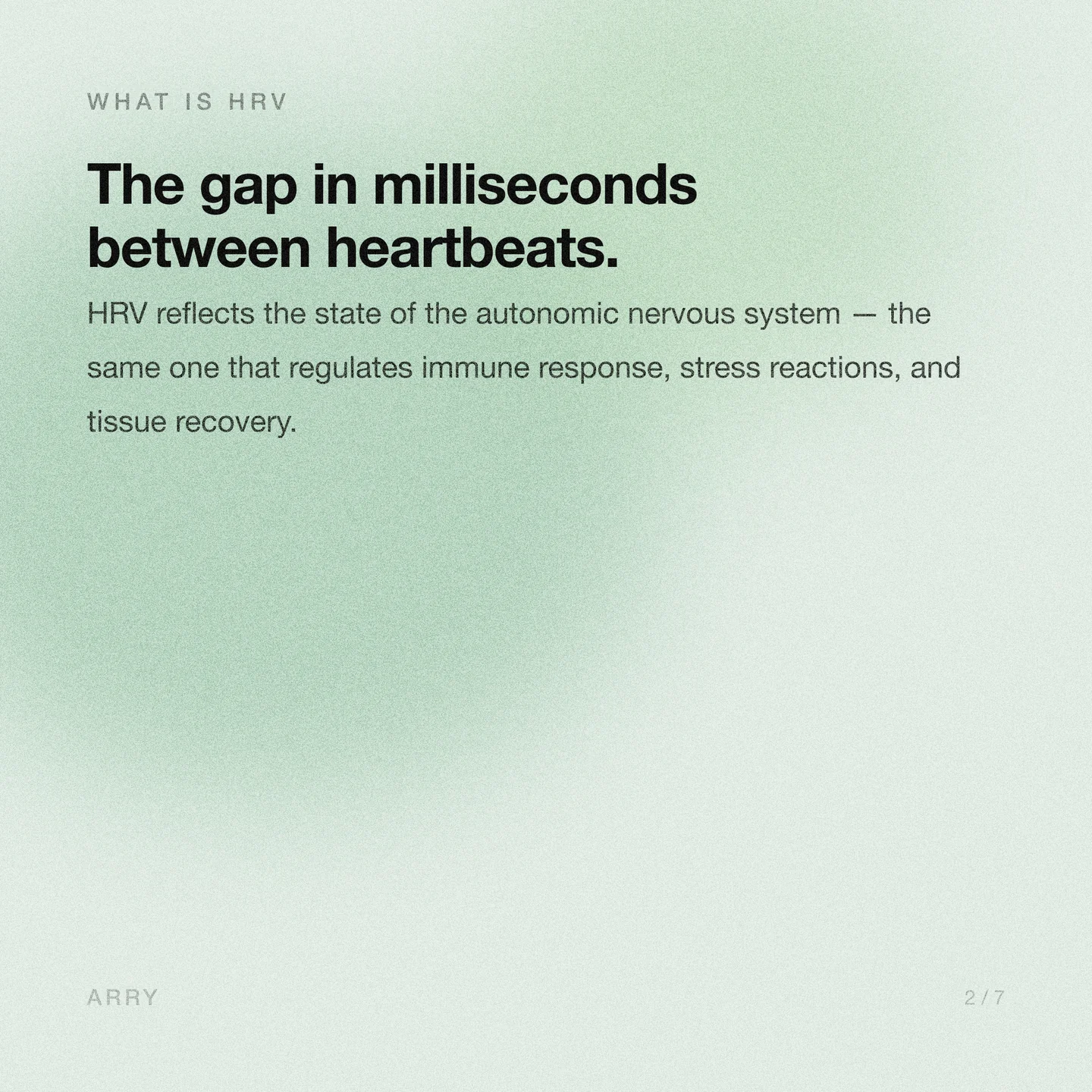
What HRV is - and why it is not a fitness metric
Heart rate variability is the gap in milliseconds between consecutive heartbeats. A healthy heart does not beat with the precision of a metronome: intervals constantly shift under the control of the autonomic nervous system.
Higher HRV usually reflects parasympathetic activity - the recovery system. Lower HRV often reflects sympathetic dominance: the body is under stress, load, or incomplete recovery. That is why HRV integrates sleep, stress, physical effort, nutrition, alcohol, and illness at the same time.
How HRV connects to immunity
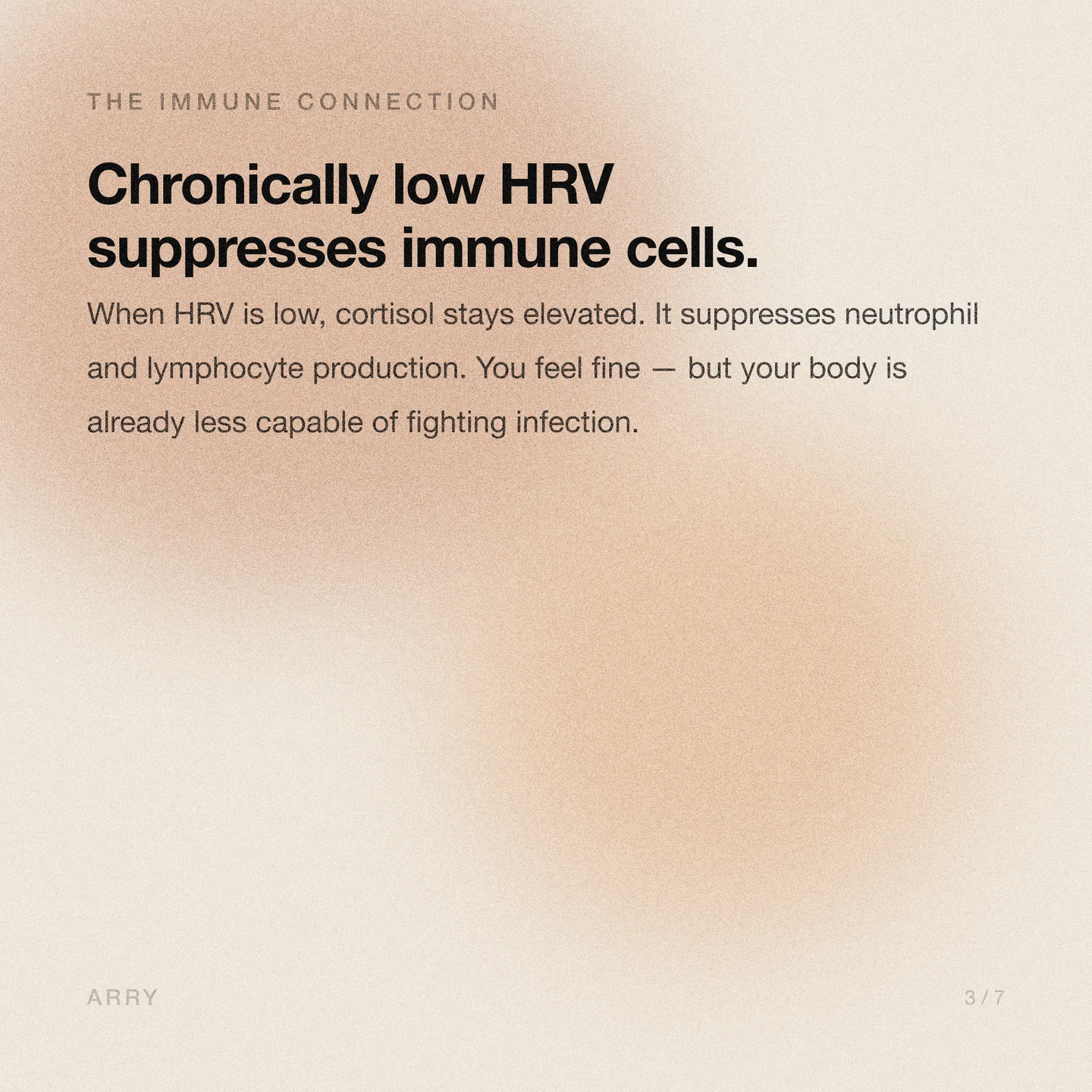
The connection runs through the autonomic nervous system and stress hormones. When HRV is chronically low, the body is more often in a state of elevated sympathetic activity. In the short term, the stress response mobilises immunity, but chronic exposure can support inflammation and impair immune regulation.
COVID-19 wearable studies found that HRV, resting heart rate, and respiration changes helped identify physiological shifts around illness onset. The important detail: the useful signal is not the absolute HRV number, but deviation from your personal baseline.
48 hours before symptoms
This is where HRV becomes practical. Smartwatch studies showed that wearable devices can detect physiological changes before symptom onset in some participants. A drop in HRV relative to personal baseline, rising resting heart rate, and changes in respiration together create a stronger signal than any one metric alone.
What affects HRV most
Consistent sleep timing. Regularity often matters more than one long night of sleep. An irregular schedule can worsen recovery even when total hours look normal.
Alcohol. Alcohol before bed often lowers overnight HRV, raises heart rate, and worsens next-morning recovery. The exact effect is individual and depends on dose, timing, and baseline state.
Zone 2 cardio. 20–45 minutes at 60–70% of maximum heart rate stimulates parasympathetic activity and improves vagal tone. The effect compounds with consistency.
Morning cold exposure. Brief controlled stress followed by rapid recovery trains nervous-system flexibility, which can show up in HRV dynamics over time.
How to track HRV with Apple Watch
Apple Watch measures HRV using photoplethysmography and stores SDNN in Apple Health. The number is almost useless without context: 35 ms can be normal for one person and a warning sign for another.
For the data to become useful, you need a personal baseline. Over 2–3 weeks of regular measurements, your norm takes shape. After that, deviations from it become a readable signal - overload, possible illness onset, or incomplete recovery.
Arry reads your Apple Health data, builds your personal HRV baseline, and turns it into a daily recovery score. arry.app
Sources
- Thayer JF, Sternberg EM. (2006) - Beyond heart rate variability: vagal regulation of allostatic systems. Ann N Y Acad Sci.
- Natarajan A. et al. (2020) - Assessment of physiological signs associated with COVID-19 measured using wearable devices. NPJ Digital Medicine.
- Mishra T. et al. (2020) - Pre-symptomatic detection of COVID-19 from smartwatch data. Nature Biomedical Engineering.
- Altini M, Kinnunen H. (2021) - The Promise of Sleep: A Multi-Sensor Approach for Accurate Sleep Stage Detection Using the Oura Ring. Sensors.
- Mäkinen TM. et al. (2008) - Autonomic nervous function during whole-body cold exposure before and after cold acclimation. Aviat Space Environ Med.